
Tennis Elbow (Lateral Epicondylopathy): Why Active People Get It- and How to Fix It
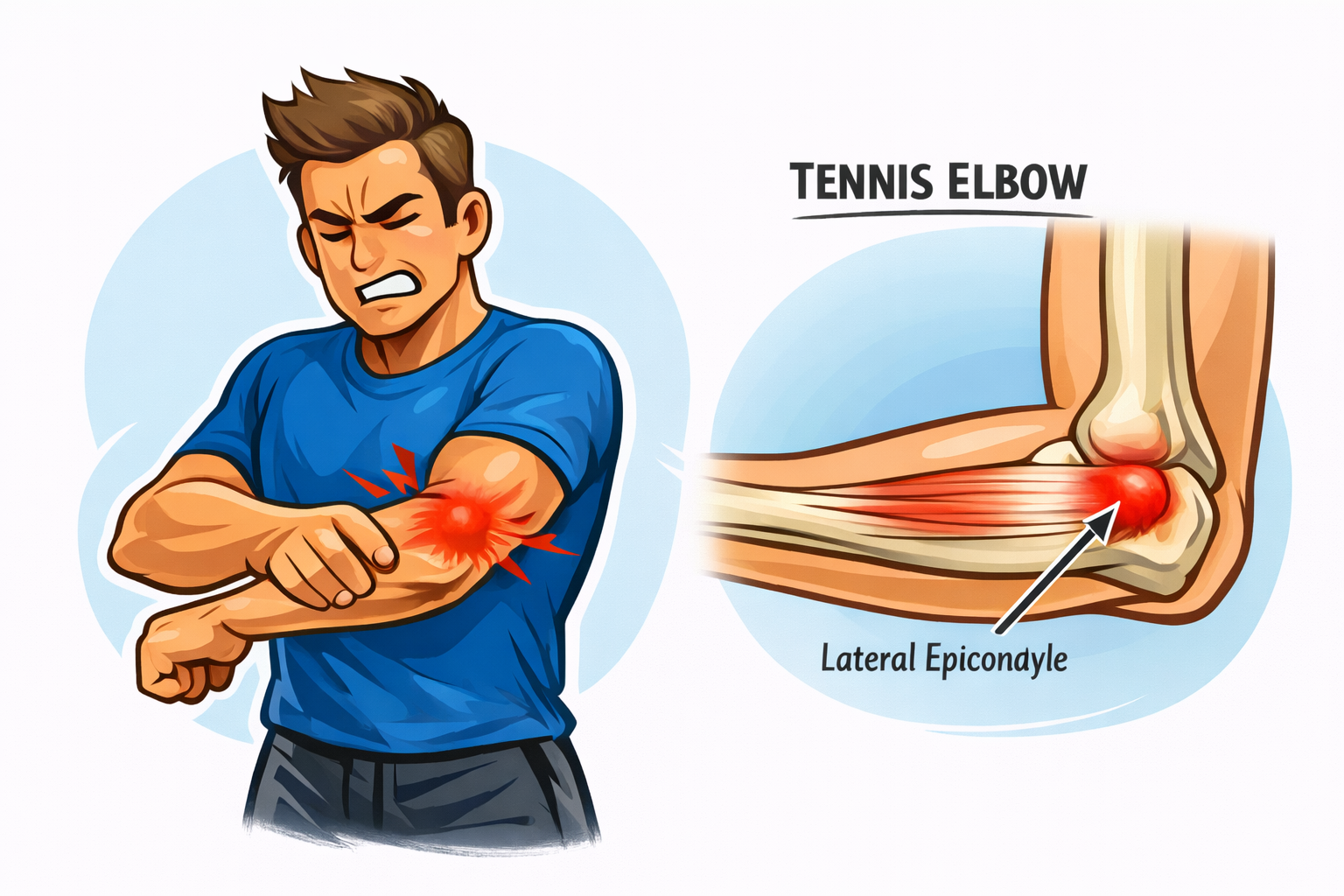
If you’re dealing with pain on the outside of your elbow when gripping a barbell, swinging a tennis racket, or holding a golf club, you might be dealing with lateral epicondylopathy, commonly called "tennis elbow".
Despite the name, this condition doesn’t just affect tennis players. We see it all the time in:
- CrossFit athletes
- Weightlifters
- Golfers
- Tennis and pickleball players
- Climbers
- Active adults who train regularly
- People who use their hands a lot (plumbers, desk workers, electricians, knitters, ect.)
The good news? It’s very treatable when you understand what’s actually happening.
What Is Tennis Elbow (Lateral Epicondylopathy)?
Lateral epicondylopathy is an overload injury of the wrist extensor tendons, especially the extensor carpi radialis brevis (ECRB), where they attach on the outside of the elbow.
This isn’t typically an “inflammation” problem (despite the old term tendonitis). It’s more accurately:
A tendon capacity issue- the tissue is being asked to handle more load than it’s prepared for.
That’s why rest alone usually doesn’t fix it long term.
Why Active People Get Tennis Elbow
Active populations put high repetitive load through gripping and wrist extension.
Common contributors we see:
Sudden increases in training load
- More pull-ups or bar work
- Increased tennis or golf volume
- Higher weight or grip intensity
- New programming or equipment
Repetitive gripping under fatigue
- Deadlifts
- Cleans/snatches
- Rope climbs
- Racket sports
- Golf swings
Poor load distribution through the arm
Sometimes the elbow is compensating for:
- Shoulder weakness
- poor thoracic, rib cage, wrist, shoulder mobility issues
- Grip inefficiency
- Wrist positioning issues
This is why just treating the elbow rarely solves the whole problem.
Common Symptoms
You might notice:
- Pain on the outside of the elbow
- Pain with, lifting, or pulling, gripping, rotational movements
- Discomfort during pull-ups, cleans, or deadlifts
- Pain with wrist extension or twisting motions
- Weakness with grip strength
- Morning stiffness in the elbow
If symptoms persist longer than a few weeks, the tendon likely needs progressive loading, not just rest.
Why Rest Alone Usually Doesn’t Work
Tendons adapt to load. When they become irritated, they need:
- The right amount of stress
- Progressive strengthening
- Gradual return to sport
- Improved movement mechanics
Complete rest often leads to temporary relief but poor long-term capacity, which is why symptoms come back when training resumes.
How We Fix It (Evidence-Based Approach)
Rehab focuses on improving tendon capacity and reducing overload.
1. Progressive loading exercises
Research strongly supports:
- Isometric exercises (pain control + early loading)
- Eccentric strengthening
- Heavy slow resistance training
- Power, speed work, and return to sport movement prep
These help the tendon rebuild tolerance.
2. Load management (not stopping activity)
We modify:
- Training volume
- Grip demands
- Movement variations
- Weekly progression
The goal is to keep you training while reducing irritation.
3. Addressing the full chain
We also look at:
- Shoulder strength
- Wrist mechanics
- Grip strategy
- Sport technique
- Training programming
Because the body is a chain, and elbows sometimes are the weakest link, in this scenario.
4. Hands-on treatment when appropriate
Depending on the individual, this may include:
- Soft tissue work
- Dry needling
- Joint mobility work
These help reduce symptoms so strengthening can be more effective.
Techniques You Can Try Now
We included a video in this newsletter showing several techniques you can use to start improving symptoms, including:
- Pain-reducing loading strategies
- Early strengthening drills
- Mobility work
- Self-management strategies
https://www.instagram.com/p/DUE4rhDEey3/
When Should You Get It Checked Out?
Consider seeing a professional if:
- Pain lasts more than 2–3 weeks
- Symptoms limit your training
- Grip strength is decreasing
- Pain keeps coming back
- You want to avoid making it worse
Early intervention makes recovery much faster.
The Bottom Line
Tennis elbow isn’t just a “tennis” problem, it’s a load management and tendon capacity issue that affects many active people.
The key to recovery is:
- Strategic loading
- Smart training modifications
- Addressing the full movement system
With the right plan, most athletes can continue training and return to full performance.